
Differences Between Convection Oven and Normal Oven: Which One Should You Choose?
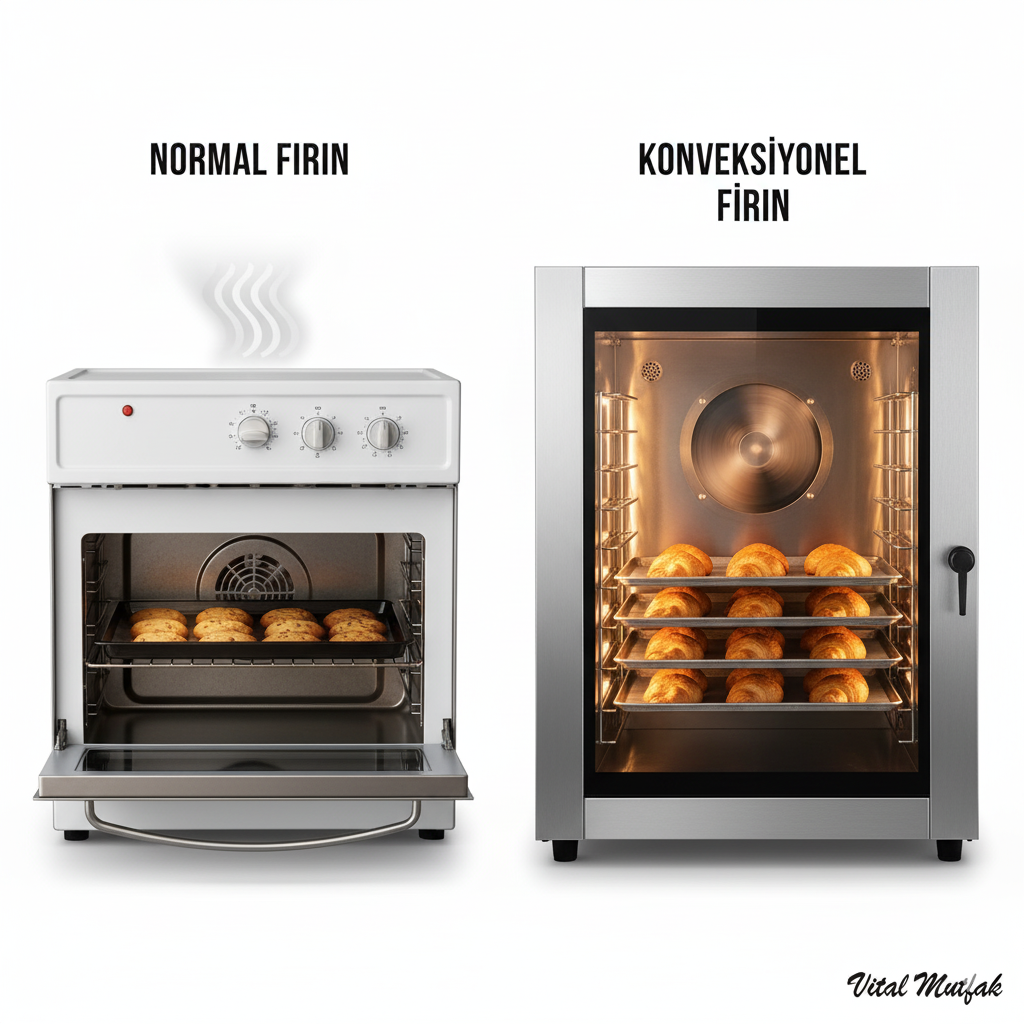
Differences Between Convection Oven and Normal Oven: Which One Should You Choose?
When setting up a professional kitchen or looking to improve the quality of your home cooking, one of the biggest question marks is the choice of oven. The market is full of terms like “static”, “turbo”, “fan” and “convection”.
Especially in industrial kitchens (restaurants, hotels, patisseries), it is vital to achieve the standard flavor. So,
What is a Normal (Static) Oven?
Regular ovens, also known as conventional or static ovens, cook through heating elements. Heaters, usually located on the floor and ceiling, heat up and this heat reaches the food without air movement. The heat is distributed inside through natural diffusion (no convection).
In these ovens, the common situation of “the back of the tray is cooked and the front is raw” is due to the lack of air circulation.
What is a Convection Oven?
Unlike a normal oven, a convection oven contains a fan and exhaust system. This fan blows the heated air into the oven, ensuring that the hot air evenly touches every part of the food.
Indispensable in industrial kitchens, this technology prevents heat from accumulating in a fixed point and guarantees that every corner of the oven is at the same temperature.
5 Key Differences Between Convection Oven and Normal Oven
If you are a business owner, the difference between these two bakeries is directly reflected in your bills and customer satisfaction at the end of the month.
1. Heat Distribution and Even Cooking
Normal Oven: Places closer to the heat source cook faster. You may need to constantly move the trays.
Convection Oven: Hot air circulates continuously thanks to the fan. The product on the top shelf and the product on the bottom shelf are cooked at the same time and at the same rate.
2. Cooking Speed
The hot air flow quickly removes the cold air barrier from the food. This allows convection ovens to cook 25% faster than conventional ovens. During peak service hours, this speed is a lifesaver for businesses.
3. Energy Saving
Convection ovens can generally operate at lower temperatures because they cook faster and use heat efficiently. For example, if you cook a product at 200°C in a normal oven, you can cook it at 175-180°C in a convection oven. This means significant electricity/gas savings in the long run.
4. Moisture Balance and Flavor
The air flow in convection ovens allows products such as meat and chicken to be “sealed” on the outside. While the outside is crispy, the juices are trapped inside and the inside remains soft. In normal ovens, the risk of drying out is higher.
5. Capacity Utilization
If you put 3 trays in a normal oven at the same time, the air flow will be cut off and cooking will grind to a halt. However, in industrial convection ovens (such as the Vital Kitchen 10-tray models), even if you fill the oven completely, the performance does not decrease.
Which Oven Should You Prefer?
When deciding, you should consider your production volume and your menu.
Normal Ovens: Sometimes preferable for soufflés, very delicate cakes or very light products that can be disfigured (blown away) by the air current.
Convection Ovens: The best option for cookies, pies, bread, bakery dishes, roasts, vegetables and any food that requires mass production . If you are setting up a professional kitchen, a convection oven should definitely be your priority.
Vital Kitchen Solutions
Choosing the right oven for your business capacity determines the success of your kitchen operation. As Vital Mutfak, we are your solution partner with our industrial oven models (Prime, Maestro, Nevo series) with electric or gas, steam feature and different tray capacities.
You can visit our products page or contact us to review our industrial oven models and get technical support.